

</p>
In rural South Dakota, internet access doesn’t stop being important once you step outside your front door. Whether you’re working in the yard, checking security cameras, or pulling up a how-to video in the garage, a strong connection makes everyday tasks easier. Two common outside connection choices exist: Outdoor Wi-fi and mobile hotspots.
They both can get you connected online, but they work very differently. Let’s break down how they compare, and which one makes the most sense for your South Dakota property.
</p>
The Basics: What Are They?
Mobile Hotspot
A mobile hotspot turns your cell phone into a short-range Wi-Fi signal. It uses your cellular data plan and can support a handful of connected devices. This option is helpful when you’re traveling or during a power or service outage.
Outdoor Wi-Fi
Outdoor Wi-Fi uses your existing home fiber connection and broadcasts it outside through weatherproof access points mounted to your home or nearby building. It turns areas like your yard, deck, shed, or garage into an extension of your connected space.
How Do A Mobile Hotspot & Outdoor Wi-Fi Rank Against Each Other?
Everyday Usability
Hotspots are convenient in a pinch—you just tap a few buttons on your phone to turn it on. But they require a bit of babysitting:
You’ll need to manually connect, monitor your data usage, and keep an eye on the signal. You may also need to troubleshoot if devices drop off unexpectedly.
Outdoor Wi-Fi, on the other hand, connects devices automatically and provides the same consistent connection as your indoor internet. No babysitting required.
Speed & Reliability
Rural South Dakotans know cell signals can be unreliable. One minute you’ve got full bars. Then you can drive a mile away and drop to one. Weather, distance from a tower, the landscape, trees, and even thick walls or metal buildings can impact cell connection.
Because mobile hotspots depend on cellular networks, stability tends to fluctuate, especially during peak times of the day or after hitting your monthly hotspot data limit.
Outdoor Wi-Fi pulls directly from your home’s fiber internet. That means even if you step outside, you get the same stable speeds that match your current internet plan.
Data Limits, Devices, and Range
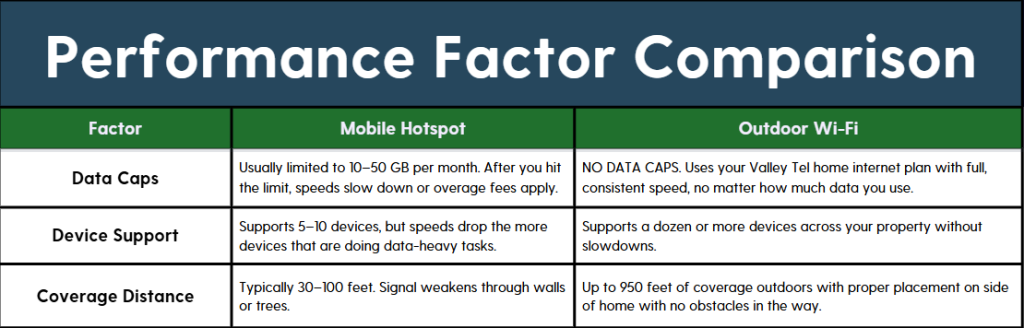
When comparing outdoor Wi-Fi to a mobile hotspot, there are three measured performance factors that matter to internet users: data limits, device support, and signal range. Here’s a quick breakdown of how they stack up, so you can decide which option fits your everyday needs.
Why Valley Telecommunications Recommends Outdoor Wi-Fi
At Valley Telecommunications, we serve some of the most rural communities in South Dakota. That’s why we offer Outdoor Wi-Fi solutions built for the way you live. Our local team installs outdoor access points designed to give you strong, reliable coverage in the places you spend time outside.
Here’s the details about Outdoor Wi-Fi:
-
Unlimited data—no throttling or extra fees
-
Extended coverage up to 950 feet
-
Seamless connection from inside to outside
-
Expert installation from technicians who live in your area
Ready to Expand Your Connection?
Be it entertaining in the yard, checking in on your security cameras, or just enjoying a slow evening on the deck, Valley’s Outdoor Wi-Fi keeps you connected.
Learn more and schedule installation here.